
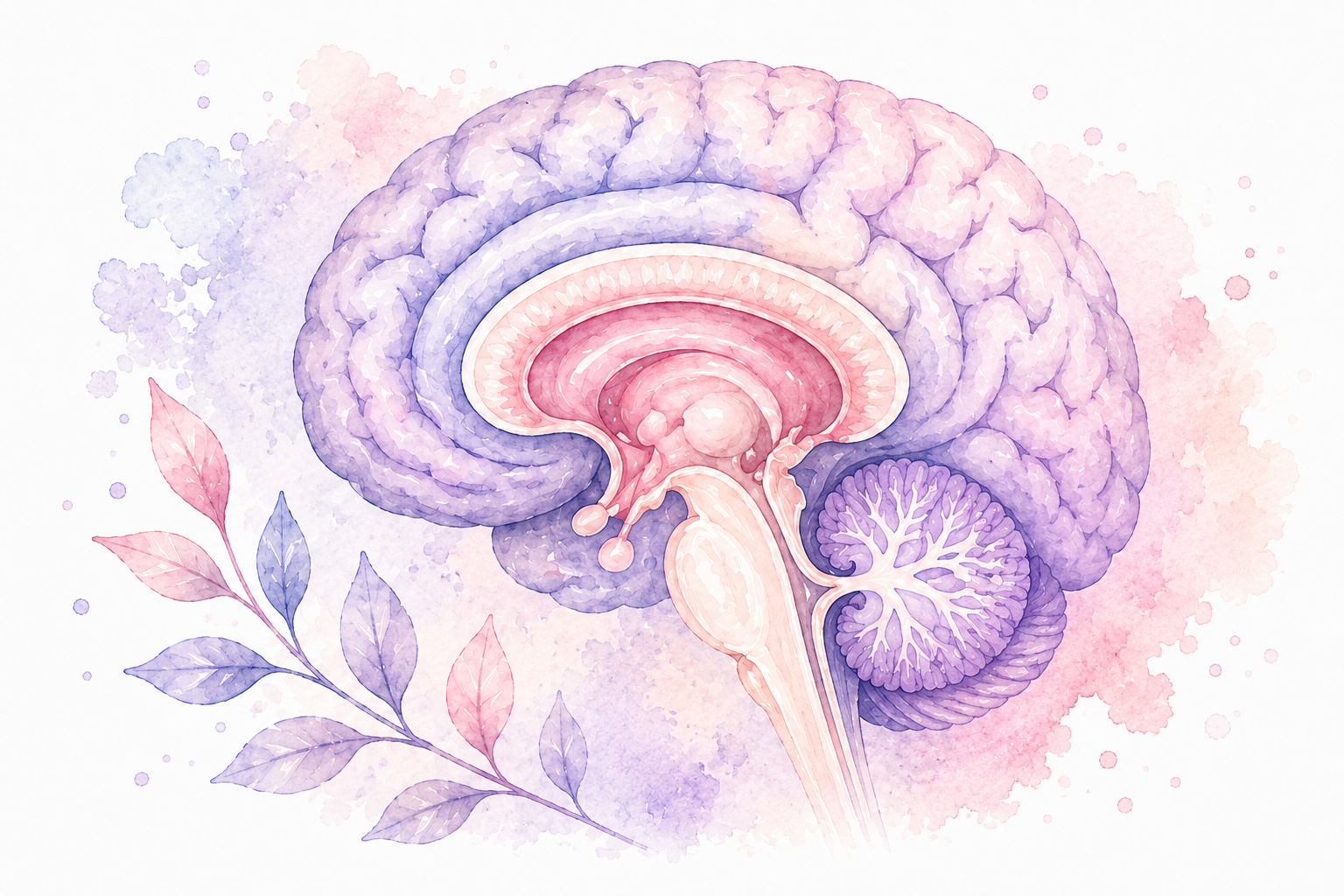
The Limbic Reset Method™
Week 1: Foundations
This week is about understanding how the nervous system can become stuck in protection mode, and why safety signaling is foundational for healing.
Your symptoms don’t define you.
You are beginning the process of retraining an overprotective system.
Instructions for this week:
Watch the video
Download the workbook
Summary of information below mirrors what is in the video and workbook
Video
Estimated run time: 24 minutes
Take your time with this week’s lesson.
You may find that certain concepts resonate more deeply as the week progresses.
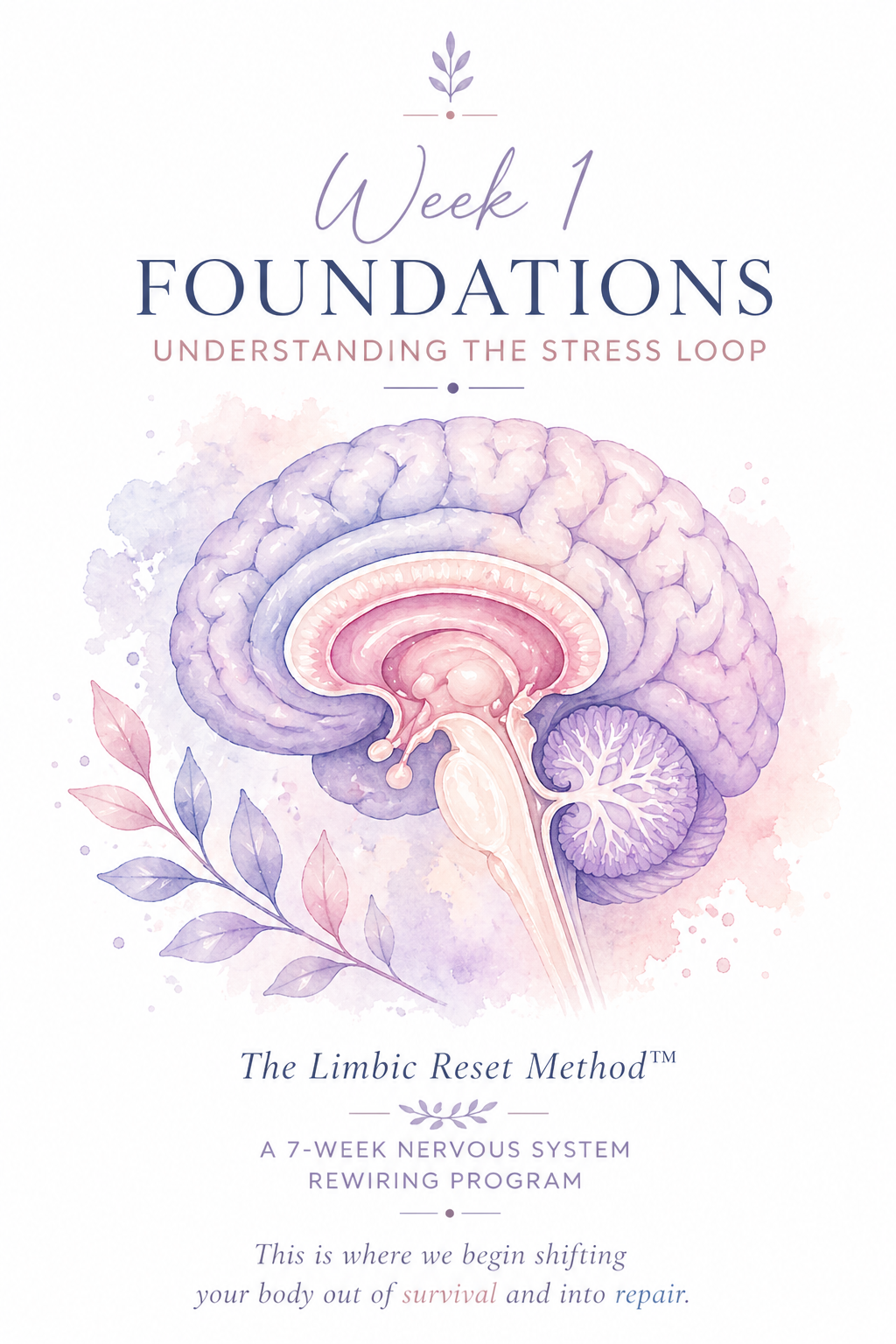
workbook
The workbook is designed to support deeper reflection, emotional engagement, and daily practice throughout the week.
foundations: Understanding the Stress Loop
This week is about understanding how the nervous system can become stuck in protection mode, and why safety signaling is foundational for healing. You are not broken. You are beginning the process of retraining an overprotective system.
VIDEO SECTION
In this lesson, we’ll explore:
The role of the limbic system
How the stress loop develops
Survival mode vs. repair mode
Why symptoms can reinforce threat signaling
The foundations of limbic rounds
Your Week 1 practice and homework
You may wish to revisit this lesson throughout the week as your understanding deepens.
Workbook
Your workbook contains:
Reflection prompts
Limbic rounds preparation
Memory activation exercises
Future visualization prompts
Daily tracking pages
Week 1 homework
Understanding the Nervous System’s Protection Response
The limbic system is deeply involved in survival, emotional processing, memory, and threat detection. When the brain perceives danger, it activates stress chemistry designed to help protect you. This response is not inherently bad. It is protective.
But when the nervous system remains in a prolonged state of vigilance, the body can begin prioritizing survival over repair.
How the Pattern Reinforces Itself
When symptoms, fear, stress, or hypervigilance repeat over time, the brain can begin associating normal sensations and experiences with danger. This creates a reinforcing cycle:
Trigger → Brain senses danger → Stress response → Symptoms → Increased attention → Reinforcement
The goal of this work is not to eliminate all stress. The goal is to begin changing how you react to it.
SURVIVAL VS. REPAIR
Your body primarily operates between two broad states:
Survival Mode:
Alert
Vigilant
Stress chemistry active
Repair Mode:
Calm
Regulated
Restorative processes active
When the nervous system perceives danger, the body releases stress chemicals like cortisol and adrenaline to help mobilize protection. These chemicals are helpful short-term. But over time, prolonged stress signaling can interfere with sleep, digestion, immune balance, and restoration. This work is about increasing your nervous system’s ability to safely shift back into repair.
AN OVERPROTECTIVE SYSTEM - Reframing Symptoms
Persistent symptoms can sometimes train the brain to remain highly focused on danger and protection.
This can increase:
Body scanning
Hypervigilance
Stress activation
Symptom monitoring
This does not mean your symptoms are imagined. It means your nervous system may have become overprotective. And an overprotective system can be retrained.
Introducing Limbic Rounds
Limbic rounds are a structured daily practice designed to help the brain repeatedly access safety, possibility, connection, and regulation. The nervous system strengthens what it rehearses.
This week’s practice includes:
15 minutes of positive memory recall
15 minutes of future visualization
Speaking out loud
Engaging sensory detail and emotion
Consistency matters more than perfection.
WEEK 1 HOMEWORK - Your Focus This Week
Reduce health-related input:
Begin creating more mental space away from symptom-focused research, scanning, and consumption.Introduce moments of novelty:
Small new experiences help interrupt repetitive nervous system patterns and increase flexibility.Complete daily limbic rounds:
Focus on repetition, consistency, and emotional engagement — not perfection.
A Gentle Reminder
Progress may feel subtle at first. This work is built through repetition, consistency, and safety — not force. You are teaching your nervous system that it is safe to shift out of protection and back toward repair.
Don’t forget to watch your video this week and download the workbook for more!
Go to Week 2, Pattern Interruption →