
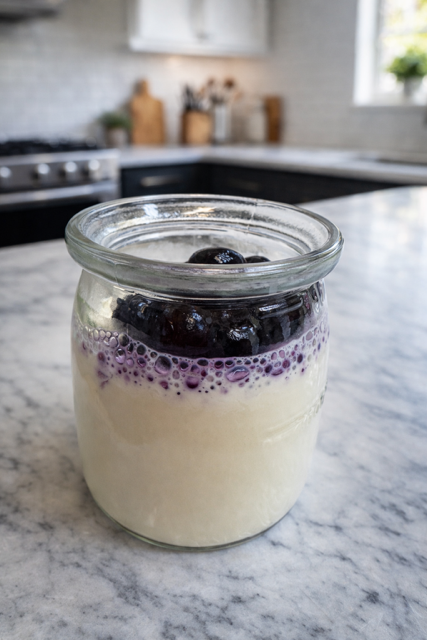
This homemade yogurt is fermented for an extended period to encourage the growth of Lactobacillus reuteri, a beneficial probiotic strain associated with gut health, immune support, and microbiome balance. The long fermentation time helps the bacteria multiply and creates a thick, tangy yogurt rich in probiotics.
Unlike typical yogurt cultures, L. reuteri thrives with longer fermentation and a slightly lower temperature, which allows the bacteria to multiply significantly.
Why L. Reuteri Yogurt Is Beneficial
Lactobacillus reuteri is a probiotic strain naturally found in the human digestive tract. Long-fermented yogurt allows this strain to multiply far beyond the amount found in probiotic capsules.
Potential benefits associated with L. reuteri include:
Improved gut microbiome balance
Helps crowd out undesirable microbes and support beneficial bacteria.
Enhanced digestion
Supports the breakdown of food and may help reduce bloating and digestive discomfort.
Immune support
A healthy gut microbiome plays a key role in immune regulation.
Skin and inflammation benefits
Some studies suggest L. reuteri may help support healthy inflammatory responses and skin health.
Oxytocin and mood connection
Some emerging research links L. reuteri with increased oxytocin signaling, which may influence mood and social bonding.
Ingredients
5½ cups organic A2 half-and-half
2 tablespoons previously made L. reuteri yogurt
Or, if starting a new batch:
5½ cups organic A2 half-and-half
2 tablespoons inulin powder (prebiotic fiber that feeds the bacteria)
8 L. reuteri probiotic tablets
Optional toppings after fermentation:
Stevia or monk fruit sweetener
Berries
Nuts
Keto granola
Equipment
Ultimate Yogurt Maker
Thermometer
Saucepan
Sterilized glass jars + lids
instructions
1. Heat the dairy
Pour 5½ cups A2 half-and-half into a saucepan. If using pasteurized dairy, heat to 180°F. If using raw milk or raw half-and-half, heat only to 110°F. Heating pasteurized dairy improves texture by denaturing milk proteins, which helps create a thicker yogurt.
2. Cool the mixture
Allow the mixture to cool to 110°F. Do not add the culture above this temperature, as heat can damage the probiotic bacteria.
3. Prepare the culture
While the milk cools, sterilize your yogurt jars.
Then prepare the starter:
Option 1 — Using previous yogurt
Mix 2 tablespoons previously made L. reuteri yogurt with a small amount of the cooled milk mixture. Stir until smooth. Note: there will be some lumps, you can’t get around it. It just happens. And it’s okay!
Option 2 — Starting fresh
Mix 2 tablespoons of the inulin powder into the half and half and then heat it up. Open 8 L. reuteri tablets and mix with a small amount of the cooled milk to form a smooth paste. Once smooth, stir this mixture into the full batch of milk.
4. Fill jars
Pour the mixture into sterilized jars. Fill jars nearly full but ensure that the yogurt level will remain below the water line of the yogurt maker during fermentation.
5. Ferment
Place jars in your yogurt maker (without lids) and incubate at: 102°F for 36 hours (you can play with these temps to suit your needs—some people experiment between 100–106°F depending on their yogurt maker.) Extended fermentation allows L. reuteri to multiply significantly. Many probiotic yogurt recipes recommend 30–36 hours of fermentation for maximum bacterial growth.
I highly recommend calculating when your batch will be done, because it needs to immediately move into the refridgerator after fermentation. You don’t want to have to get up in the middle of the night, or come home from work during the day in order to put it away. I always make my yogurt around 7pm at night, so it’s ready at 7am in the morning.
6. Chill
Once fermentation is complete, add lids and transfer jars to the refrigerator. Chill for at least 4 hours to stop the fermentation process and allow the yogurt to thicken fully.